Targeted repair
Best when most turf is healthy and the cause is local.
- One or several defined areas
- Compatible surrounding turf
- A local cause that can be corrected
Full-property lawn renewal
When a lawn stays thin, muddy, uneven or bare despite repeated repairs, the problem is often deeper than the surface. We identify what caused the failure, correct the conditions within the project scope and rebuild the lawn with the right establishment method for the property.
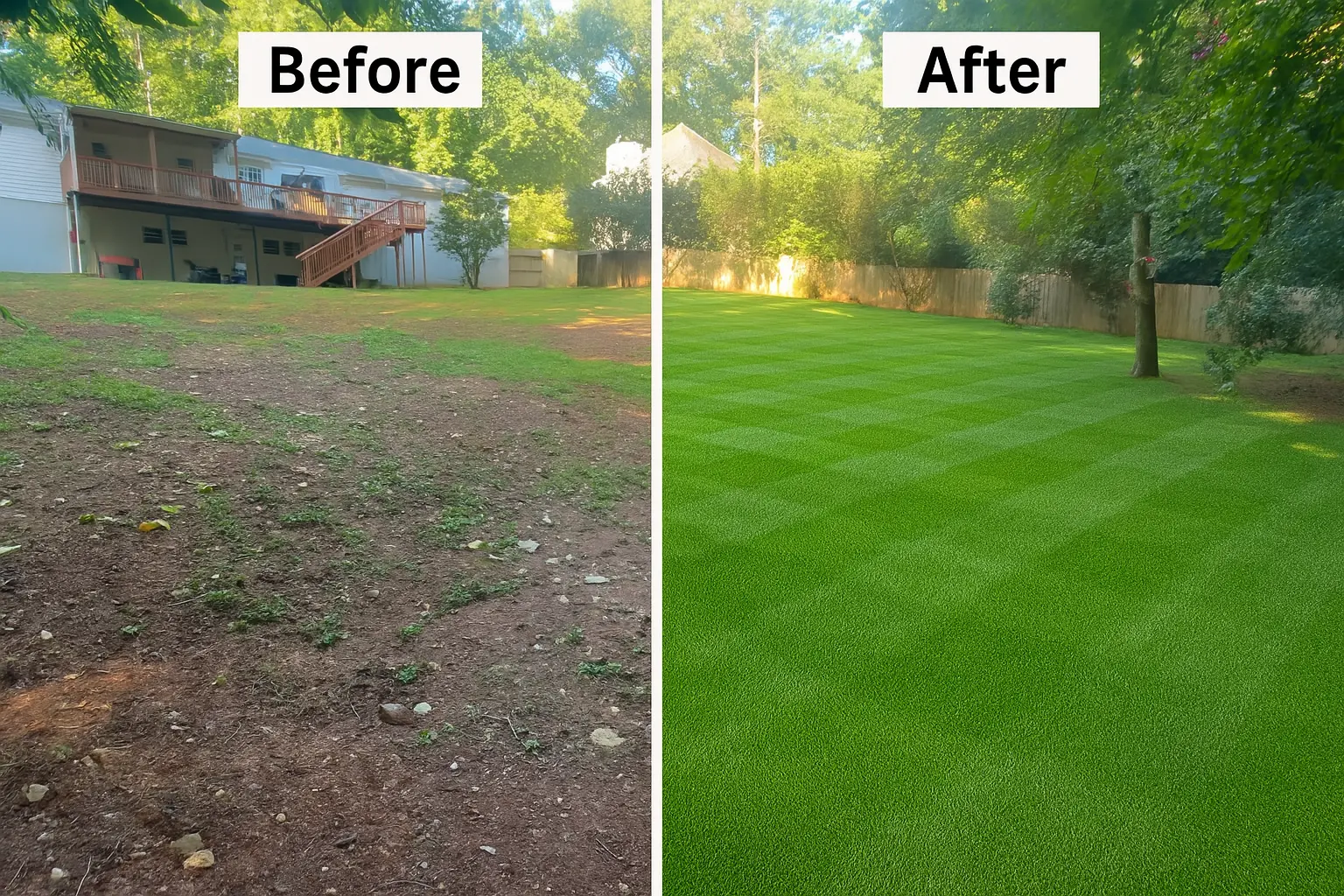
Project result
This backyard needed more than another small patch. The finished result shows what becomes possible when the entire growing surface is treated as one connected system.
Talk through a similar property →Why the details matter
Small repairs make sense when most of the lawn is healthy and the damage is isolated. Widespread thinning, repeated failure, compaction, erosion, drainage trouble or a grass that does not fit the site may justify a broader restoration. We recommend the least disruptive approach that gives the property a fair opportunity to succeed.
Repair or reset
Replacing more lawn is not always the smarter answer. The extent and cause of the damage should determine the scope.
Best when most turf is healthy and the cause is local.
Best when failure or site problems affect much of the usable lawn.
How the work comes together
The scope may change with the property, but the logic stays simple: understand the condition, prepare correctly and execute deliberately.
Evaluate why the existing lawn failed and decide what is worth preserving.
Remove or correct failed surface conditions, improve the finish grade and ready the soil.
Install sod, seed or a planned combination and provide project-specific aftercare.
Related solutions
Explore the work most often considered alongside complete lawn restoration.
Diagnose and repair thin grass, bare spots, compacted soil, drainage damage and failing turf in Gainesville, Cumming and Dawsonville.
Explore serviceSite-specific sod installation with careful preparation, grading and aftercare for Gainesville, Dawsonville and Cumming properties.
Explore serviceRebuild thin or struggling fescue with thoughtful preparation, quality seed, soil improvement and clear aftercare across North Georgia.
Straight answers
What North Georgia homeowners usually want to know before an assessment.
If most of the lawn is healthy and damage is isolated, repair may be enough. Widespread failure, poor grading, drainage trouble, severe compaction or unsuitable turf often points toward a larger restoration.
Neither is automatically better. Sod offers immediate coverage; seed can be a practical choice for certain grasses and seasons. The property, turf type, timing and desired outcome should guide the decision.
Yes, when drainage or grading work is included in the written scope. Some water problems should be corrected before new grass is installed.
Timing depends on grass type and method. Fescue is generally renovated in fall, while Bermuda and Zoysia establish most actively during warm-season growth.
That depends on the establishment method, rooting, weather and type of use. Heavy traffic should be limited until the turf is securely established.
Area, access, removal, soil preparation, grade, drainage, material choice and establishment method all affect the scope and price.
Owner-reviewed next step
Share the location, concern and a few photos. Cory will review the information and help determine the practical next step—without pressure.