North Georgia lawn restoration guide
Sod vs. seed: which is better for your North Georgia lawn?
The best answer depends on more than price. Sunlight, slope, season, turf type, watering access and the condition beneath the existing lawn all influence which method has the better chance to last.
The short answer
Start with the property—not the product.
Sod is often best when fast, continuous coverage matters. Seed can be a strong fit when the turf, season and site support germination. Neither option succeeds for long if compaction, poor grade, drainage, shade or watering is ignored.
- Sod gives coverage, not immunity.It can still fail over poor soil, standing water or an unsuitable site.
- Seed needs a real establishment window.Timing, moisture, soil contact and protection from runoff all matter.
- The grass must fit the light.No installation method can compensate for a turf type that does not receive enough usable sun.
- Preparation is part of the finished lawn.Once grass covers the ground, the work underneath is what helps it last.
Side-by-side
What actually changes between sod and seed?
These are planning differences, not promises. Weather, turf type and the condition of the property can change the timeline.
| Decision factor | Sod | Seed |
|---|---|---|
| Finished appearance | Immediate, continuous coverage after installation. | Fills in as seed germinates and develops. |
| Establishment window | Roots into prepared soil over time; traffic still needs to be limited. | Needs a suitable growing window and more patience before normal use. |
| Slopes and runoff | Coverage can protect prepared soil sooner, but active runoff still needs correction. | Seed can wash or move on exposed slopes unless the site is stabilized. |
| Watering | Requires consistent moisture while roots knit into the soil. | Requires careful, frequent surface moisture during germination and early growth. |
| Traffic | Looks finished immediately, but should stay lightly used until roots establish. | Needs protection through germination and early growth before regular use. |
| Turf availability | Useful for grasses commonly sold as sod, including Bermuda and Zoysia. | Often practical for fall fescue renovation and selected repair work. |
| Upfront investment | Typically costs more at installation because mature turf is produced and placed. | Usually lowers the initial material cost, but preparation and aftercare still matter. |
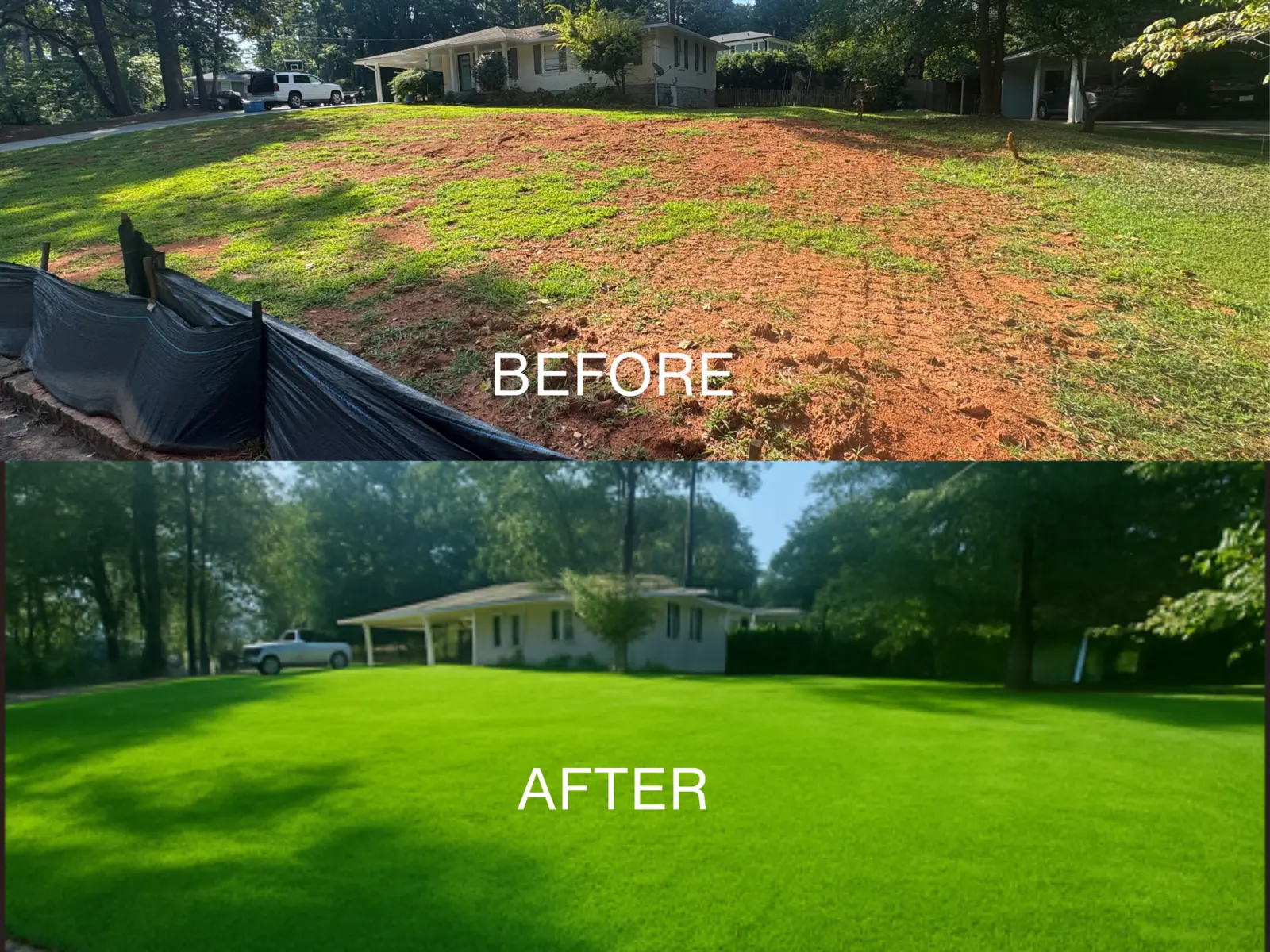
Real restoration result
The visible finish begins with an invisible decision.
This property needed a connected restoration plan rather than another isolated patch. The correct method follows diagnosis, preparation and the conditions the lawn must live with after installation.
Project photography is real. Results vary with property conditions, materials, season, care and scope.
See how complete restoration works →A practical starting point
When each method may fit.
The assessment should confirm the choice, but these conditions help frame the conversation.
Sod may fit when…
Fast, uniform coverage has real value and the selected turf is available as sod.
- The site has exposed soil or erosion risk
- A finished appearance is needed sooner
- The lawn can be watered consistently
- The grade and soil can be prepared first
Seed may fit when…
The grass, season and use allow a longer establishment period.
- Fall fescue renovation is the goal
- The area can be protected from traffic
- Runoff will not move the seed
- Consistent germination watering is realistic
Grass type matters
North Georgia lawns do not all follow the same calendar.
The method needs to match both the property and the turf.
Tall Fescue
Commonly renovated from seed in fall. It tolerates more shade than warm-season turf, but summer heat, disease and inadequate light can still thin it.
Bermuda
Performs best with abundant sun and active warm-season growth. Sod offers quick coverage; some varieties and projects may use other establishment methods.
Zoysia
Often installed as sod and valued for dense growth. It still needs appropriate sunlight, soil preparation, watering and time to root.
When grass is not the answer
Deep shade, concentrated traffic or persistent water may call for a bed, path, drainage work or another designed surface instead of repeated turf replacement.
Before choosing a method
Make the decision in the right order.
A durable lawn plan works from cause to finish.
Diagnose
Check light, soil, grade, water movement, traffic and why the existing lawn failed.
Prepare
Correct the conditions included in the scope and create a suitable, even growing surface.
Establish
Choose sod, seed or a staged approach, then follow watering and traffic guidance.
Straight answers
Sod versus seed questions.
The details homeowners should understand before choosing an establishment method.
Is sod always the fastest way to get a usable lawn?
Sod creates immediate coverage, but it still needs time to root before regular traffic. Poor soil, drainage or watering can delay establishment or cause failure.
Is seed cheaper than sod?
Seed normally has a lower material cost, but the full project also includes preparation, soil correction, erosion control, watering and the possibility of follow-up work. Compare complete scopes, not material alone.
Can I seed a steep slope?
Sometimes, but exposed seed is vulnerable to runoff. The slope, water volume, soil and stabilization method should be evaluated before choosing seed.
Which is better for shade?
Neither method can overcome inadequate light. The right turf species, actual hours of usable light and tree-root competition matter more than whether the grass arrives as sod or seed.
When is seed best for North Georgia fescue?
Fall is generally the strongest renovation window because cooler conditions support establishment before summer stress. Exact timing depends on weather and the property.
Does sod eliminate the need for soil preparation?
No. Sod placed over compacted, uneven or poorly drained ground can fail just as surely as seed. Preparation is part of the lawn, even after it is covered.
Take the next step
Explore the service behind the decision.
See the restoration paths most closely connected to this guide.
Complete Lawn Restoration
Restore thin, damaged or failing North Georgia lawns with careful diagnosis, preparation, grading, sod or seed and clear aftercare.
Explore serviceSod Installation
Site-specific sod installation with careful preparation, grading and aftercare for Gainesville, Dawsonville and Cumming properties.
Explore serviceFescue Lawn Renovation
Rebuild thin or struggling fescue with thoughtful preparation, quality seed, soil improvement and clear aftercare across North Georgia.