Conditions to correct
Local problems often need correction before turf returns.
- Compaction or poor soil contact
- Shade, roots or concentrated traffic
- Runoff, a low spot or washout
Targeted lawn recovery
Thin turf and bare patches are usually symptoms. Shade, compaction, poor drainage, traffic, erosion, inconsistent watering or the wrong grass for the site can all prevent a repair from holding.
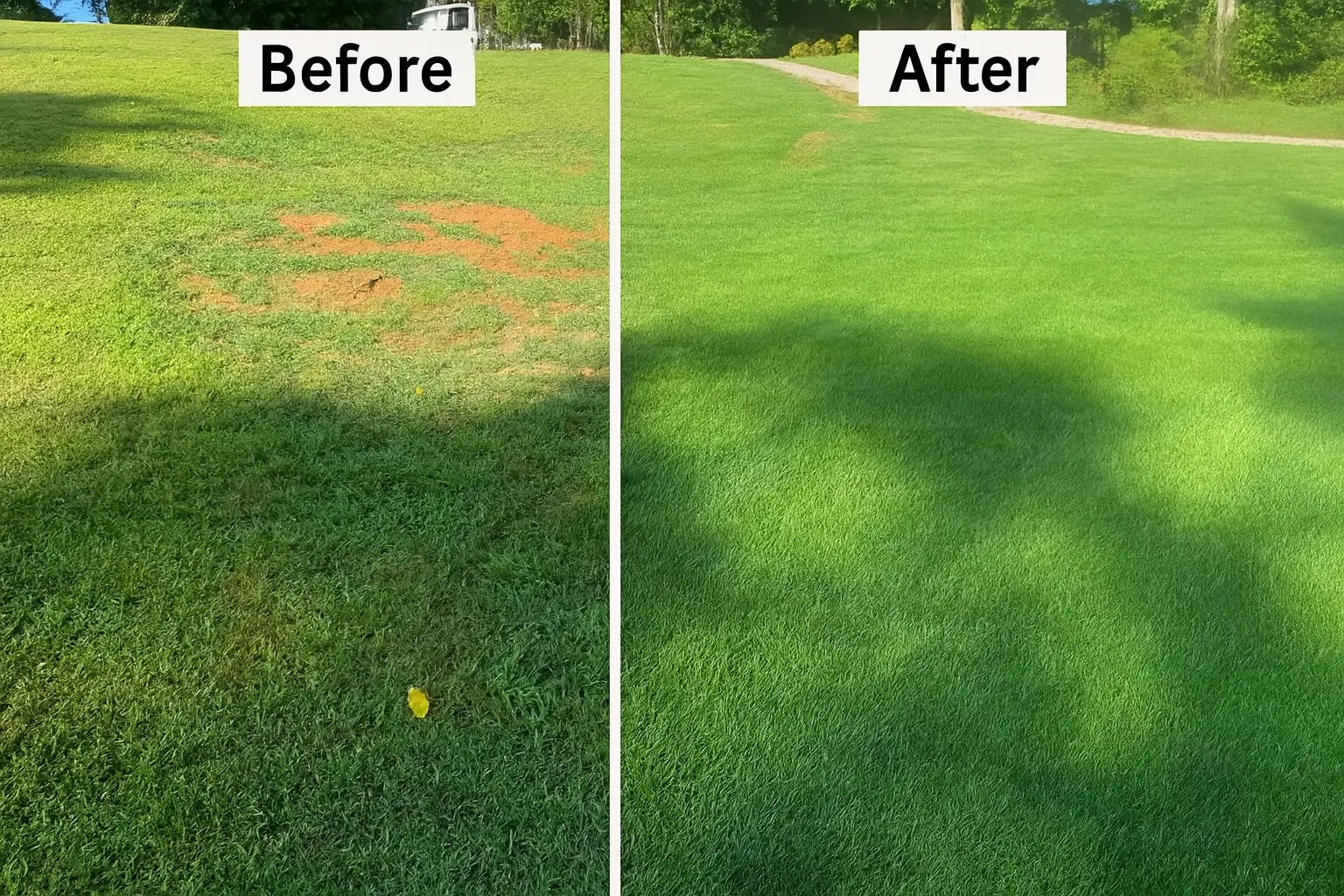
Targeted recovery
When the larger lawn still has a workable foundation, focused diagnosis and preparation can restore the damaged area while preserving healthy turf.
Talk through a similar property →Why the details matter
Placing seed or sod over a problem may improve the lawn temporarily, but lasting improvement begins with understanding why the turf failed. We evaluate what is happening above and below the surface, then recommend the smallest repair that makes sense.
Root-cause diagnosis
The best repair depends on the condition creating the damage—not just the size of the bare area.
Local problems often need correction before turf returns.
The establishment method follows the diagnosis and season.
How the work comes together
The scope may change with the property, but the logic stays simple: understand the condition, prepare correctly and execute deliberately.
Inspect the damaged area, surrounding turf, sunlight, slope, soil and use.
Address the local cause and prepare a clean, compatible growing surface.
Use sod, seed, aeration, topdressing or another suitable method and explain aftercare.
Related solutions
Explore the work most often considered alongside thin & bare lawn repair.
Restore thin, damaged or failing North Georgia lawns with careful diagnosis, preparation, grading, sod or seed and clear aftercare.
Explore serviceImprove compacted soil and thin turf with professional core aeration and overseeding in Gainesville, Dawsonville and Cumming.
Explore serviceCompost topdressing for Fescue, Bermuda and Zoysia lawns in Gainesville, Dawsonville and Cumming, GA, with measured applications for North Georgia clay.
Straight answers
What North Georgia homeowners usually want to know before an assessment.
Yes. When the surrounding lawn is healthy and the cause is localized, a targeted repair may be the most sensible option.
Recurring bare spots often indicate unresolved shade, compaction, drainage, erosion, traffic or unsuitable turf. Replanting without addressing the condition commonly leads to another failure.
That depends on turf type, season, size, slope, watering and how quickly coverage is needed. We choose the method after evaluating the site.
Aeration can improve compacted soil, but it is not a complete solution when shade, drainage, erosion or turf incompatibility is the main issue.
Every turf needs usable light. If the area is too dark, an expanded bed, mulch, stone or a designed path may be a better long-term answer.
Timing varies with turf, method, weather, sunlight and aftercare. We explain the expected establishment process for the specific project.
Owner-reviewed next step
Share the location, concern and a few photos. Cory will review the information and help determine the practical next step—without pressure.