Back 2 Eden field guide
Lawn topdressing in North Georgia: soil testing, material and timing.
Topdressing is not a single product or a truckload spread by habit. The right plan starts with the lawn’s purpose, a soil test and an on-site evaluation, then matches the material, depth and season to the turf.
The short answer
The best topdressing starts before material reaches the lawn.
Back 2 Eden does not treat topdressing as a generic load of “good dirt.” We begin with the reason for the work, review a soil test and inspect the turf, surface, drainage and recovery conditions. Those findings shape the material blend, application depth, timing and whether topdressing is even the right service.
- Test the soil.Use actual pH and nutrient information instead of guessing about amendments.
- Define the purpose.Soil improvement, seed contact and minor leveling are different objectives.
- Match the material.Compost, sand and screened blends behave differently in the lawn.
- Protect the turf.Depth, weather, irrigation and active growth determine how safely the grass can recover.
Material follows purpose
Compost, sand and blended material do different jobs.
The right recommendation can be one material, a compatible blend or no topdressing at all.
Compost and soil-focused blends
Often used when improving the upper growing environment is the main objective.
- Organic matter and soil-building goals
- Fall Fescue aeration and overseeding
- Light applications that settle into existing turf
- Selection informed by the soil test and material quality
Sand and leveling-focused blends
Often used for minor surface correction where the turf can actively grow through the treatment.
- Small waves, low areas and mower scalping
- Actively growing Bermuda or Zoysia
- Compatible particle size and clean material
- Staged passes instead of burying the canopy
The Back 2 Eden approach
Test. Specify. Apply.
The value is not simply spreading material. It is making the material and method fit the property.
Test and diagnose
Review the soil test, grass type, compaction, thatch, water movement, irrigation and the reason the homeowner wants topdressing.
Specify the blend
Choose compost, sand, screened soil or a compatible combination, then calculate a conservative depth and volume for the lawn.
Apply and finish
Prepare the turf, spread evenly, work material into the canopy, clean hard surfaces and provide watering and mowing guidance.
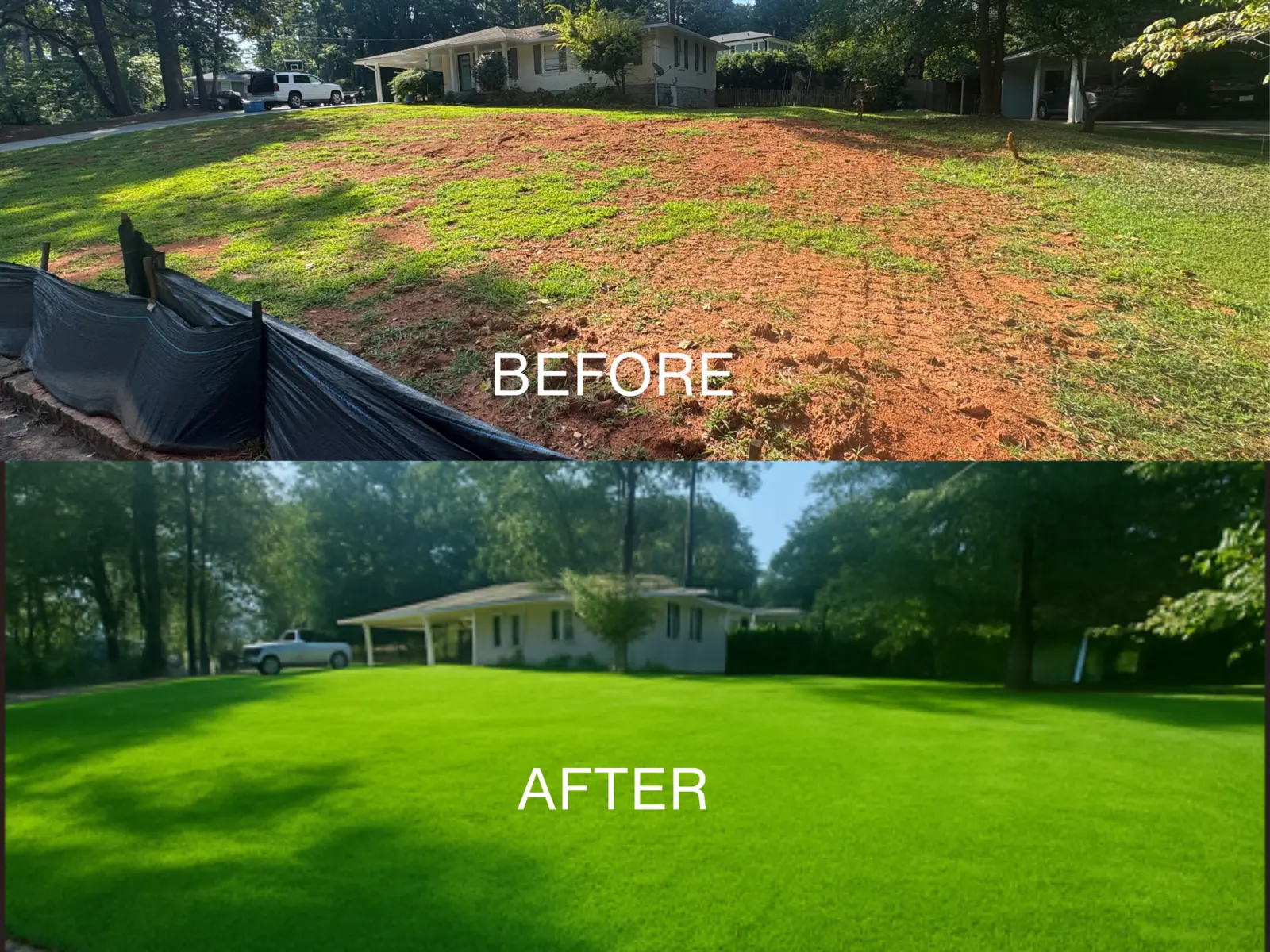
Real project result
The finished lawn is only the visible layer.
This real North Georgia transformation shows why diagnosis and preparation matter. Topdressing can be one part of a recovery plan, but the lasting result depends on matching the service to the soil, turf, season and underlying cause.
Project photography is real. The exact scope may include more than topdressing, and results vary with property conditions, materials, weather and aftercare.
Ask what your lawn actually needs →Grass type changes the calendar
Topdressing should follow the plant’s recovery window.
North Georgia lawns do not all need the same blend or the same schedule.
Bermuda
Sand or a compatible leveling blend is commonly considered after full green-up during active growth. Dormant turf cannot recover quickly from burial.
Zoysia
Dense Zoysia may benefit from careful surface work while actively growing, but thatch, mowing height and crown exposure must be respected.
Tall Fescue
Light compost or screened soil is often paired with fall aeration and overseeding. Fescue should not be smothered or stressed unnecessarily in summer.
New or weak turf
Unrooted sod, active disease, irrigation failure or severely thin grass may need stabilization before broad topdressing.
When topdressing is not enough
More material is not automatically more improvement.
A thin application can improve a surface. It cannot create a drainage outlet, repair a failed pipe, correct major grade or make a shade-intolerant grass thrive without sunlight.
- Deep settlementMay require lifting turf, adding structural soil or repairing the cause of movement.
- Water-routing problemsMay need drainage or grading before the lawn surface is addressed.
- Severe compactionMay call for aeration or deeper preparation rather than a cosmetic layer.
- Repeat failureNeeds root-cause diagnosis before another truckload is applied.
Straight answers
North Georgia topdressing questions.
What homeowners should know before choosing a material or scheduling the work.
What does a soil test change about topdressing?
A soil test helps identify pH and nutrient conditions so amendments are not chosen by guesswork. We combine those results with turf type, compaction, drainage, thatch and the actual surface problem.
Is compost or sand better for a lawn?
Neither is universally better. Compost is commonly used when soil improvement is the goal. Sand or a compatible mineral blend may fit minor surface correction on actively growing warm-season turf. Some lawns need a carefully chosen blend.
How much topdressing should be applied?
The correct depth depends on turf density, material and purpose. Many lawns benefit from a light, measured pass rather than a heavy layer. Leaves and growing points should not be buried.
Can topdressing level a bumpy lawn?
It can improve minor-to-moderate irregularities, often through staged applications. Deep settlement, major elevation changes and water-routing problems usually need grading, drainage or turf repair instead.
When should Bermuda or Zoysia be topdressed?
Warm-season grasses are usually treated after full green-up while they are actively growing and able to recover. Weather, irrigation and the amount of correction still control the final schedule.
When should Fescue receive compost topdressing?
Light compost topdressing is often paired with fall core aeration and overseeding. Summer heat is not the time to stack unnecessary stress on Fescue.
Do you provide topdressing in Gainesville, Dawsonville and Cumming?
Yes. Back 2 Eden serves Gainesville, Dawsonville and select Cumming properties. We use the address, lawn photos and an assessment to confirm the right service and schedule.
Local service
Topdressing assessments in Gainesville, Dawsonville and Cumming.
Start with your city page, then send the address and lawn photos so we can confirm fit.
Gainesville
Soil-focused topdressing, lawn leveling and restoration planning for Gainesville properties.
Dawson CountyDawsonville
Owner-involved evaluation for clay, compaction, settlement and seasonal turf work.
Forsyth CountyCumming
Precision lawn topdressing for select Cumming and Forsyth County properties.
Choose the service
Soil improvement or surface correction?
Explore the two topdressing paths, or send photos if the problem is not obvious.
Compost Topdressing
Compost topdressing for Fescue, Bermuda and Zoysia lawns in Gainesville, Dawsonville and Cumming, GA, with measured applications for North Georgia clay.
Explore serviceLawn Leveling & Topdressing
Professional lawn leveling and sand or soil-blend topdressing for Bermuda and Zoysia in Gainesville, Dawsonville and Cumming, GA, with honest limits.